How to Budget for AV at a High-End Wedding
Most couples planning a high-end wedding have a number in their head for flowers, a number for catering, and no number at all for AV. Then a quote lands, and the reaction is some version of: that much, for speakers? It is a fair reaction. Audio, lighting, and video are the least visible line items on a wedding budget and the most likely to be misunderstood. They are also the ones guests notice fastest when they go wrong — a toast nobody can hear, a first dance lit like a conference room, a video montage that looks washed out on the screen you rented.
The most common budgeting mistake is starting from equipment. Someone decides they want an LED wall, prices an LED wall, and works backward. That almost never produces a coherent production. A better starting point is a percentage. For a high-end wedding — meaning a design-forward event at a non-standard venue, with a real guest list and real production value — plan on 8 to 15 percent of your total budget going to AV. Below 8 percent, you are generally getting a DJ with powered speakers and some uplights. Above 15 percent, you are usually into custom scenic, multi-camera video, or a venue with unusual technical demands. That range covers audio, lighting, video, power distribution, and the labor to run all of it.
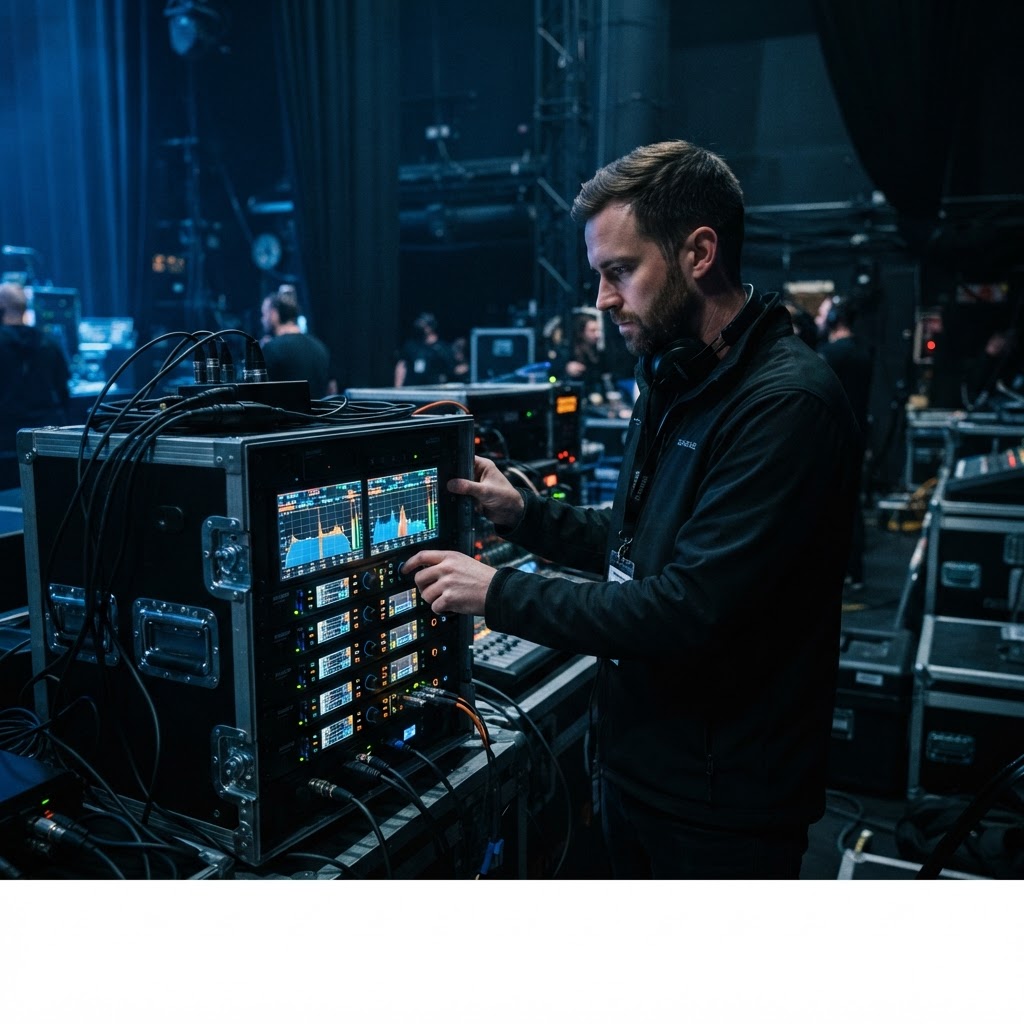
Audio is the one category where underspending is immediately obvious, and it typically takes 30 to 40 percent of the AV budget. Ceremony audio in particular is unforgiving — outdoor ceremonies in Los Angeles are fighting wind, traffic, and open air with no walls to reinforce anything. You need lavalier or headset mics on the officiant and the couple, a discreet distributed speaker setup rather than one loud box, and someone actively riding levels. Reception audio is a different problem: a room full of hard surfaces, a band or DJ pushing volume, and eighty people trying to have conversations. Sizing the system to the room matters far more than raw wattage.
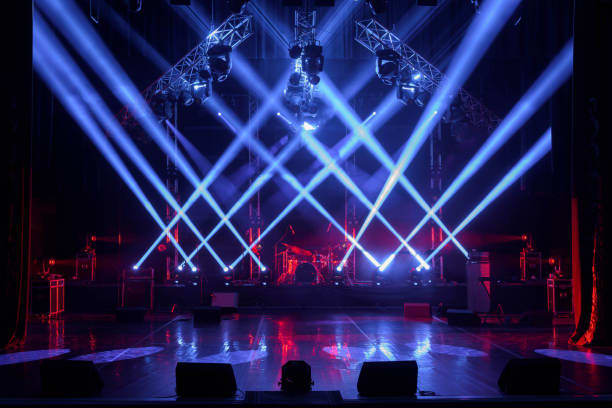
Lighting is the highest-leverage AV spend at a wedding, because lighting is what your photographer and videographer are capturing all night. A beautifully designed reception lit badly photographs as a beautifully designed reception, badly. Two things matter more than fixture count. The first is color rendering. Cheap LED fixtures produce spikes in the green part of the spectrum that cameras pick up even when your eye does not, and skin tones come back sallow in a way no amount of grading fully fixes. Ask any vendor for the TLCI rating on their fixtures; if they do not know what you are asking, that is your answer.
The second thing that matters is warmth. Many high-end weddings still mix in tungsten and incandescent sources for the dinner and first-dance looks, because nothing else quite replicates that quality of light on skin and on a room. It costs more in power and in fixtures, and it shows up in every photograph you will keep. Lighting generally lands at 30 to 40 percent of the AV budget alongside audio.
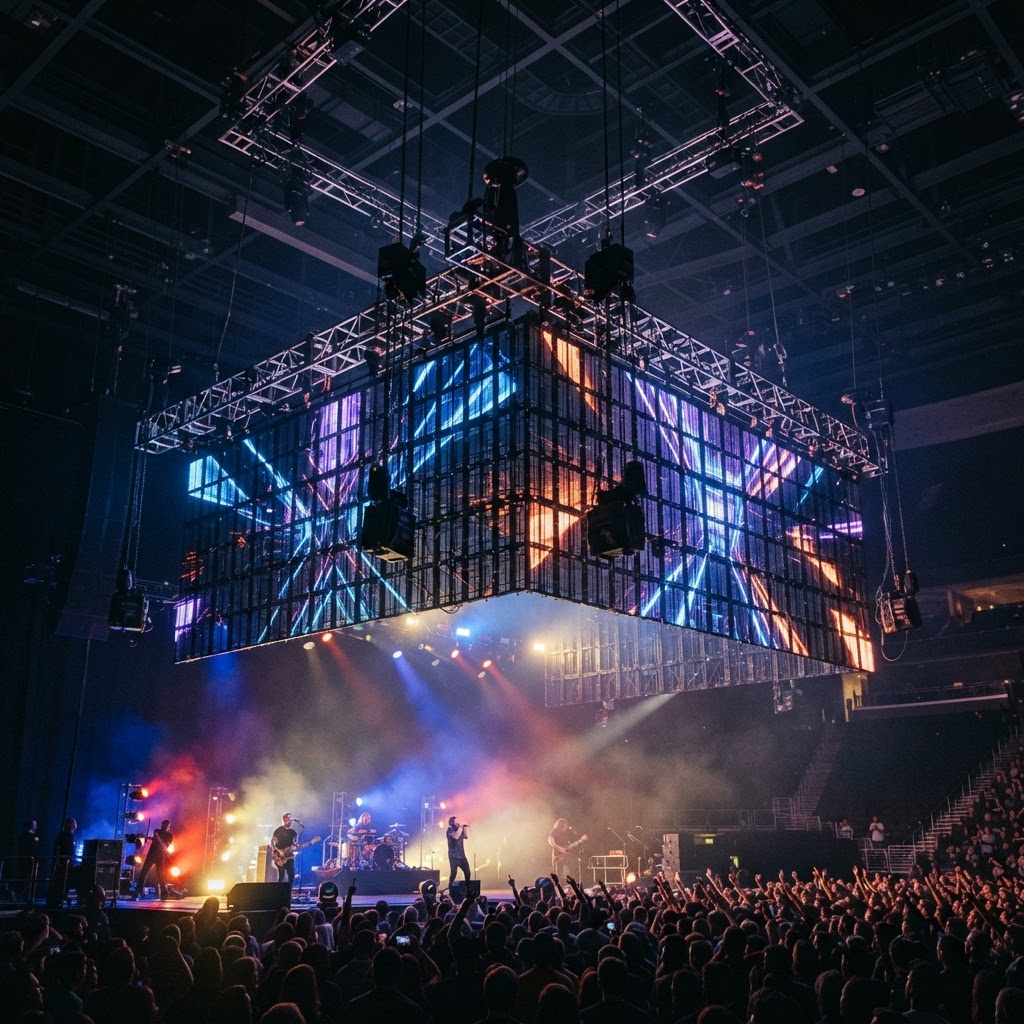
Video is worth paying for when it does one of three things: displays content that matters, such as a montage or a message from family who could not travel; extends sightlines for a large guest count; or acts as scenic design behind the band. If it is scenic, pixel pitch matters enormously, because wedding guests sit close. A P3.9 wall that looks stunning at a concert looks like visible dots at twelve feet. For intimate venues you want P1.6 to P2.6 — a finer pitch that holds up at close viewing distance. That costs more per square foot, and it is the difference between a design element and an eyesore. Depending entirely on whether you need it, video runs anywhere from 0 to 30 percent.
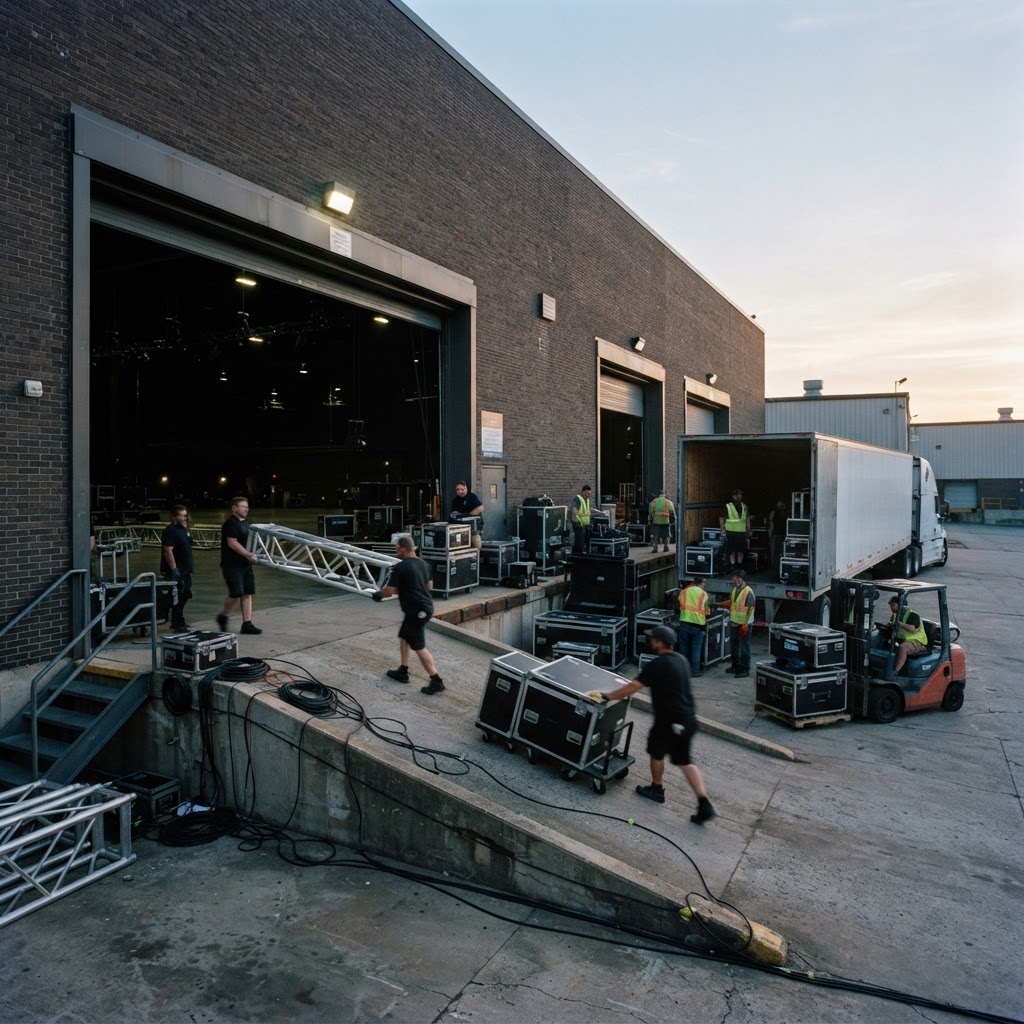
Then there is the invisible line item. Estate weddings, tented weddings, and vineyard weddings frequently do not have the electrical service to run a full production. That means generators, distribution, and cable runs — and it means a site visit well before load-in to find out. This is the single most common source of surprise costs in Los Angeles wedding production, because so many of the best venues are private properties never designed to host 150 people and a band. Budget 5 to 15 percent here, higher for tented or off-grid sites.
Labor is typically 35 to 50 percent of the total, which surprises people. A wedding is a one-take live event. There is no rehearsal for the ceremony, no second attempt at the toast, and no acceptable moment for someone to walk on stage and fix a mic. What you are paying for is a crew that loads in the day before, tunes the system to the actual room rather than a spec sheet, runs a soundcheck with the actual band, and then sits at a console all night making hundreds of small adjustments nobody notices. That last part is the entire product. Equipment sitting unattended is not production — it is rental. When you compare two quotes and one is dramatically cheaper, check the crew count and the call times before you check the gear list.
Four questions are worth asking every AV vendor. Have you worked this venue before, since venue familiarity saves real money on load-in, power, and rigging assumptions. What is the TLCI rating on your lighting fixtures, because if your photographer and videographer matter to you, this matters to you. How many crew, and what are their call times, which tells you whether you are buying production or renting boxes. And what is not included — power, permits, parking, meals, and overtime are the usual gaps between a quote and an invoice.
The short version: budget 8 to 15 percent of total spend for AV. Expect roughly a third to audio, a third to lighting, and the remainder split between video and infrastructure. Assume labor is half of it, and treat that as the feature rather than the overhead. Do that, and the AV quote stops being a surprise and starts being a plan.