The Ultimate Guide to Corporate Event Management

A successful corporate event is far more than a simple calendar entry. It serves as a vital business and marketing strategy that enhances organizational recognition, promotes meaningful connections, and ensures all stakeholders remain in harmony while gaining market traction. From global conferences and investor meetings to product launches and leadership retreats, a well-executed event can drive revenue, strengthen internal culture, and build long-term partnerships. On the other hand, poorly managed events can lead to significant financial waste and operational instability.
This is why corporate event management must be treated as a disciplined business function rather than a secondary task for an overloaded team. Corporate event management is the structured process of planning, coordinating, and executing business-focused events designed to achieve measurable outcomes. Unlike social event planning, it requires operational precision, financial oversight, vendor governance, compliance management, and cross-functional coordination.
Every high-performing event starts with a clear corporate event strategy. Without strategic clarity, even the most polished production becomes an expensive exercise in logistics. Before you choose a venue or brief vendors, align on the event's purpose and how you will measure success — what measurable outcome you are targeting, who the core audience is, what business objective this supports, and how success will be quantified.
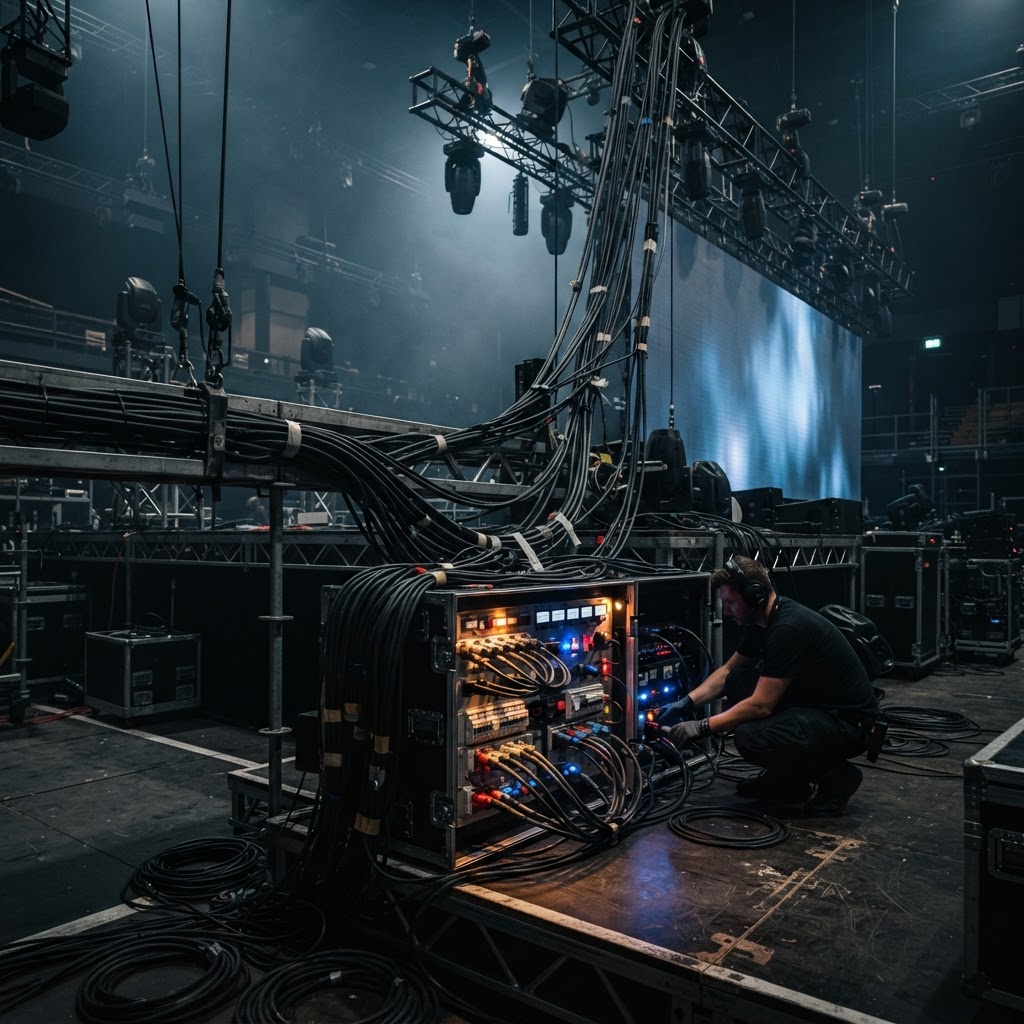
Successful corporate events follow a structured lifecycle. Planning and budget development define scope and feasibility — objective setting, KPI development, budget forecasting, and venue research. Operational design turns ideas into executable plans, covering venue layout, load-in schedules, AV production mapping, registration systems, and security protocols. Vendor coordination manages contracts, payment milestones, insurance, and service-level agreements — because one overlooked vendor can derail an entire timeline.
As the event approaches, precision becomes critical — finalizing the schedule, confirming the run-of-show, conducting rehearsals, and testing technical systems. On event day, strategy becomes performance, with teams managing guest experience flow, stage transitions, speaker support, and real-time troubleshooting. Strong professional event planning means executives can focus on messaging rather than operational fires. After the event, evaluation justifies investment through attendance metrics, engagement data, lead generation numbers, and budget reconciliation.
Even experienced organizations make preventable errors: underestimating production timelines, failing to define measurable objectives, ignoring contingency budgets, overloading internal teams without operational support, and skipping post-event analysis. Applying consistent corporate event planning best practices reduces recurring mistakes and strengthens long-term performance. Discipline and documentation are what separate repeatable success from reactive planning.